Wednesday, May 30, 2012

3 1/2 Time Outs (Vol 2)


My second volume of this meme is the Daddy Wars edition.  Prescinding from pointless pugilism, one can propose a plethora of paradigms, plenty of which palliate our pounding parental lobes.

I. Five responses:
     1. Stomp hard on the toes, then run.
     2. I like a .410 for the under 10.
     3. What's a video game?
     4. No comment.
     5. When you're right, you're right - Fr. Eric's duct tape is classic and stylish.

II. Five questions (and to make it easy, these are T / F):
     1. Flip flops are lame.  Unless they're color coordinated with the hat.
     2. If some is good, more is better.
     3. The first rule of non-cooperation is hit it with a hammer.  The second rule is see rule one.
     4. The maximum number of rooms in a house that may be painted any shade of pastel is two.
     5. Symmetry is unnecessary.

III. Opening the second front:
     Baseball has a certain aesthetic charm, and as a communal event, outside in the summer, it's almost unmatched (carillon concerts, although rare, are a higher caliber of charm).  However, as a sport, it's effete.  Manliness in sports resides on the ice.  If you can limp, you can play.  Also, God is a goalie.

III-point-v: On Maneuvers:
     Football in the snow is a close second. 

Thursday, May 24, 2012

3 1/2 Time Outs (Vol... ummm... 1)


It's not Tuesday, but it's not Sunday either, so I'm gonna jump into the raging 3 1/2 Time Outs meme started by LarryD. He also started Fantasy Bishball, and I hope that makes a comeback this summer.

This is the Memorial Day version.

1. Here's an F4F, circa 1942. This was called "Wildcat."
It was armed with .50-cal machine guns and could also carry rockets and bombs.

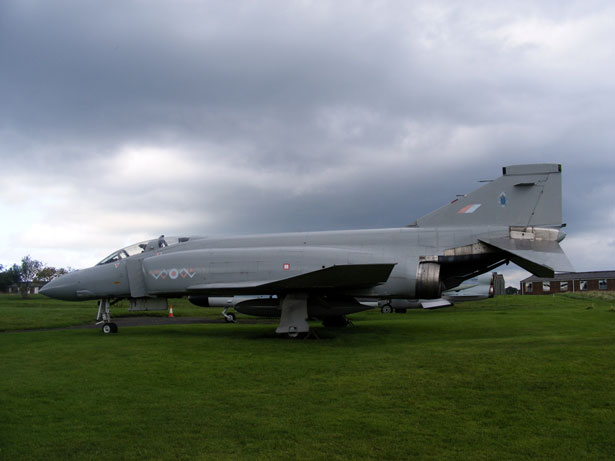
2. Here's an F4F, circa 1972. This was called "Phantom."

It was armed with a variety of missiles and bombs.

3. Here's an F4F, circa 2012. This is called "Constitutional Defender."

3 1/2. The F4F "Constitutional Defender" is armed with these:

...and these:
...which makes this most recent F4F infinitely more powerful than either of the first two.

(All images are used non-commercially, and believed to be in the public domain, or otherwise permitted.)

Wednesday, February 29, 2012

Stephen L. Talbott on Evolution

A very cool series of articles in the New Altantis, about evolution, the illusion of randomness, and purpose (telos) in organisms.

Wednesday, November 23, 2011

Critically important PSA from William Shattner

Is this a resurgence of the evil Captain Kirk? He did always love to play with fire...


Maniple wave to The American Catholic.

Friday, November 11, 2011

Armistice Day (the feast of St. Martin of Tours)

In Flanders fields the poppies grow
Between the crosses, row on row,
That mark our place; and in the sky
The larks, still bravely singing, fly
Scarce heard amid the guns below.

We are the Dead. Short days ago
We lived, felt dawn, saw sunset glow,
Loved and were loved, and now we lie,
In Flanders fields.

Take up our quarrel with the foe:
To you from failing hands we throw
The torch; be yours to hold it high.
If ye break faith with us who die
We shall not sleep, though poppies grow
In Flanders fields.

(Lt. Col. John McCrae, 1915)

I insist on calling it Armistice Day, for the historical grounding it provides. "Veterans Day," while expressing a truth I support, mythologizes too much about the realities of Nov 11, 1918, and what came before. The truth contained in the name "Veteran's Day" is opposed to only one of the two ways we can "break faith with us who die;" namely, that we not forget our purpose, and our end. In fact, given the very grave moral evils which, lately, our society has supinely accepted as normal, this risk is very real.

But the other risk is that we forget for whom we fought and fight: not for ourselves, not for our own glory or power, and even, in the end, not only for self-preservation. The name "Veterans Day" doesn't give enough leverage to recognize this risk. But Nov. 11 was chosen for the Armistice because it is the feast of St. Martin, one of the great patron saints of France. Like St. Martin, we fight for Christ, "that the light not be utterly extinguished by the dark." We fight for the poorest and the least, who have no one to fight for them. We fight, only in order to be some part of the means by which Almighty God is "propitius, ut intercessione beati Martini Confessoris tui atque Pontificis, contra omnia adversa muniamur, per Dominum Nostrum," as today's Collect prays.

At least, that has to be our ideal in this imperfect world. To abandon that ideal is to break the covenant between us, who have received the torch, and those whose previous sacrifice kept it aflame.

Friday, September 30, 2011

Penance Acrostic

Tired goes along the traveler, footsore and tender,
Road-weary, home-seeking, hungry for rest,
Under the ancient rood-sign, his soul says, unbidden:
"Suffering Savior, by Your wounds save me!
Too much Your great patience, Victor, have I tormented.
Memory reviles me - unworthy! So many..."
Ever, yet - hark to this! - echoes anew the Voice Unbegotten:
Rest seek you? Remember! For this I was riven,
Carried on splintering Cross, from my Sacred Heart coursing
Ypocras to exchange My new life for yours.

Monday, May 2, 2011

St. Athanasius and the proper formation of the laity

Today is the memorial of St. Athanasius, the great fourth-century bishop of Alexandria. He was so fabulous a bishop that three separate emperors exiled him from his see five different times. Yeah, you rock!

Among all his truly amazing and even miraculous deeds and achievements, including being one of St. Antony's closer disciples and writing his life, which played a most instrumental role in the conversion of St. Augustine of Hippo, etc., etc., one of the ones that most stands out for me was his extraordinary formation of the laity of Alexandria.

During his third exile, in the mid-350's, the self-indulgently semi-Arian Emperor Constantius tried to impose one of his lackeys, a priest named George, as bishop in Athanasius's place. After listening to him preach for a while, the people decided they'd had quite enough of his heresy, so they dragged him out of his (really Athanasius's) pulpit and lynched him in the market just outside.* That's what I call "Catholic Action!"

(It should be noted that this was a political thing, really, and not mere random violence, since the soldiers - Arians by association at the very least - had murdered some dozens of the faithful when they had come to arrest Athanasius and impose George and the (false) bishop. By killing George, they were explicitly rejecting Constantius's interference in the local Church. The clear message was "George sleeps with the fishes." He who lives by the sword, etc.)

Anyway, Constantius was no doubt deeply pissed, but he didn't try to impose another Arian lackey as (false) bishop. Not too long after, he died, and his cousin, Julian -- the last remaining relative of Constantine the Great, later called "Julian the Apostate" -- permitted all the exiled orthodox bishops to return to their sees.

St. Athanasius, confessor and doctor of the faith, pray for us. By your holy example and intercession, may we so love and believe the true and holy Catholic faith, that we defend it as worthily.

* NB, please don't take this as any kind of endorsement of violence, political or otherwise. The fourth century was a violent age; in that context, this action might be seen as admirable in defense of the faith. In the abstract, Christ who died for us, certainly does not desire us to kill for him. Certainly in today's politics, such an action would not be commendable in any way.